
Feria del Caballo survival guide: how to enjoy Jerez without losing the plot
Feria can be glorious, exhausting, moving, ridiculous, and logistical chaos all in one day. Plan accordingly.
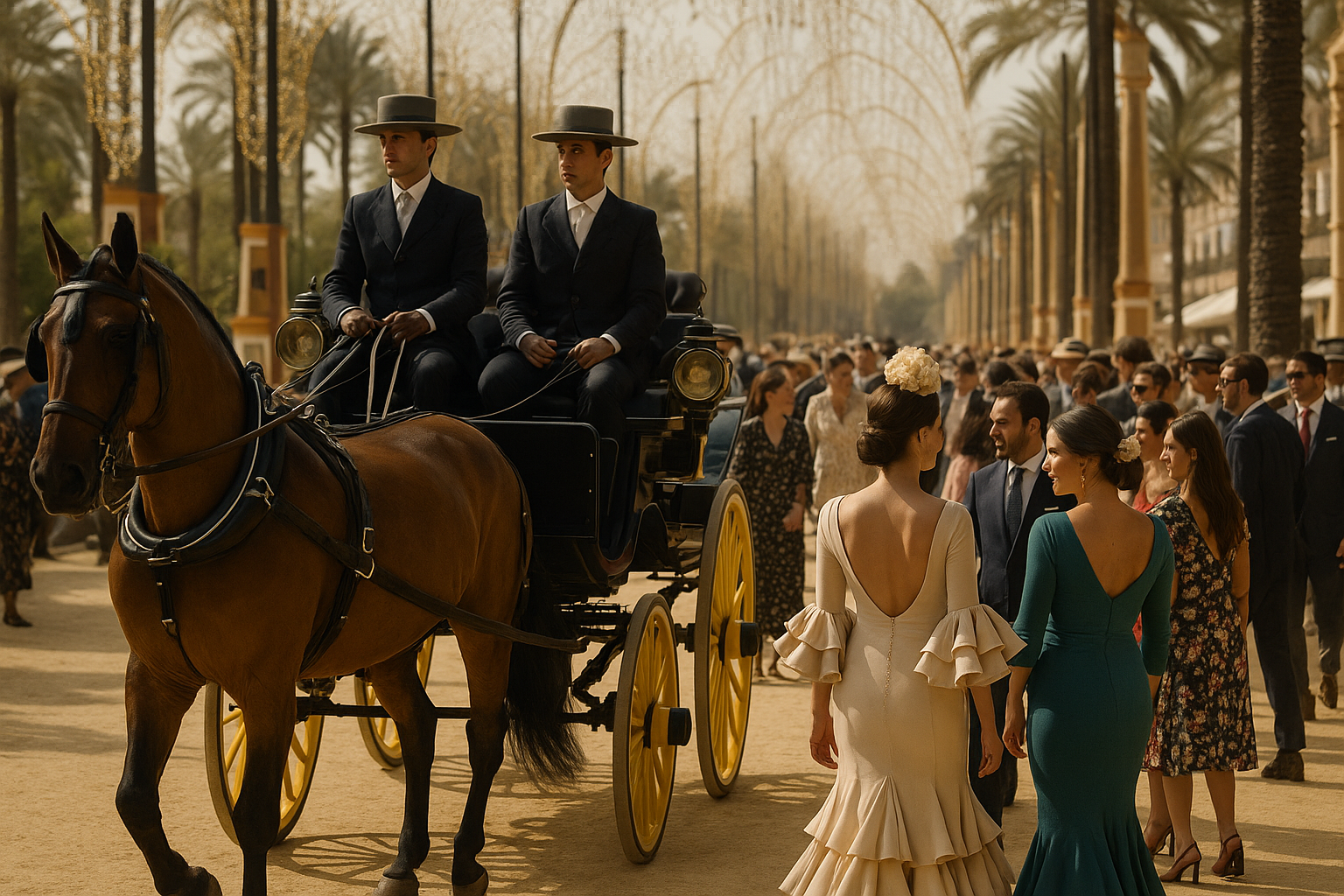
Feria del Caballo is one of those moments when Jerez becomes fully, unmistakably itself.
It is also one of the easiest times to misjudge your energy, your timing, your shoes, your transport, your appetite, and your tolerance for heat, dust, music, crowds, and social momentum.
A lot of bad Feria experiences come from the same mistake: people treat it like a normal event that happens to be large.
It is not that.
Feria is a temporary civic universe with its own rhythm. If you enter it correctly, it can be joyful, strange, elegant, funny, messy, and deeply local all at once. If you enter it badly, it can become a marathon of thirst, noise, waiting, and tactical regret.
So this guide is not about romantic clichés. It is about how to enjoy Feria without losing the plot.
First: understand what kind of day this is
Feria is not one mood from start to finish.
It changes by hour, by weather, by company, by energy level, and by what you think you are there for.
There is a version of Feria for:
- families moving through the daytime atmosphere
- locals doing long social circuits
- people dressing beautifully and pacing themselves well
- visitors arriving overexcited and fading too early
- late-night groups who mistake stamina for strategy
The first step is to decide which version of the day you actually want.
The golden rule: do less than your enthusiasm tells you
Most people over-plan Feria and under-plan recovery.
A better strategy is to choose a few anchor moments:
- a sensible arrival window
- one proper meal
- one or two social or atmospheric peaks
- a clear idea of how you are getting out
That already gives you a much better day than charging in with endless optimism and no structure.
Timing matters more than people think
Morning and midday
This part can feel more open, more breathable, and easier to read. It is often the best moment if you want to observe, photograph, understand the shape of the fair, and move without constant friction.
Afternoon
Now the day begins to thicken. Heat, movement, social build-up, and decision fatigue start to matter more.
Evening and night
This is where people either settle into the flow or unravel. If you have not eaten properly, paced yourself, or thought about transport, the night has a way of punishing confidence.
Dress with some realism
Yes, style matters. Yes, Feria is one of those places where people often look excellent. But do not make the classic outsider error of dressing for an imagined photograph rather than a real day.
Think about:
- walking distance
- dust and ground conditions
- temperature shifts
- time on your feet
- how late you may realistically stay
If your shoes are already a problem before the second drink, you have planned badly.
Eat earlier than your fantasy version of yourself wants to
Feria exposes people who assume they can improvise food indefinitely.
The strongest move is simple:
- eat properly
- eat before you are desperate
- do not rely on vague later plans
One of the easiest ways to ruin the day is to confuse social momentum with actual energy management.
Drink like you want the day to remain interesting
This should not be controversial, but apparently it still needs saying.
A good Feria day is not improved by trying to prove your resilience. Pace matters.
The point is not to become unusable by late afternoon. The point is to remain inside the experience long enough to enjoy its changes.
That means:
- drink water as if you have some respect for tomorrow
- do not turn every stop into a challenge
- stop equating “more” with “better”
Go with a transport plan, not a transport prayer
People are consistently too casual about how they are getting there and, more importantly, how they are getting back.
Do not leave this until the moment when everyone else is also leaving it until the end.
Think in advance about:
- how you arrive
- how you leave if tired early
- how you leave if staying much later than intended
- whether you have a backup option
Feria logistics are much easier when solved before the day becomes noisy and blurry.
Company shapes the day almost as much as the fair itself
Some people are excellent Feria company. Some are not.
Good company for Feria:
- can pace themselves
- can decide without drama
- do not need every minute to become a grand event
- understand that atmosphere is part of the point
Bad company for Feria:
- complain constantly
- panic about timing because they never thought about timing
- need every plan to be either perfect or ruined
- mistake overconsumption for vitality
Choose your companions accordingly.
What makes a good Feria day
A good day usually has a shape like this:
1. A calm entry
You arrive before the day is already fighting you.
2. A little observation
You let yourself absorb the fair instead of trying to dominate it immediately.
3. A proper meal or food anchor
This stabilises everything.
4. One or two excellent moments
Not fifteen. Just enough.
5. A graceful exit
You leave while the day is still giving more than it is taking.
That last part matters more than visitors usually admit.
What people often get wrong
Trying to do the entire fair in one day
This is how you end up remembering only fatigue.
Arriving too late to catch the day properly
If you turn up already behind the rhythm, you spend the rest of the time compensating.
Treating the fairground like a challenge course
Feria is not improved by brute force or performative stamina.
Underestimating the environment
Heat, dust, standing, waiting, and movement all add up.
Leaving transport until the end
This is one of the oldest self-inflicted wounds in event culture.
What outsiders should focus on first
If this is your first Feria, prioritise:
- understanding the atmosphere
- reading the social rhythm
- noticing how the day changes
- finding one or two moments that feel genuinely good
Do not prioritise:
- conquering every possibility
- constant comparison to other fairs or festivals
- chasing the fantasy of a perfect, uninterrupted day
The fair is better when you let it be a real place rather than a performance for your expectations.
If you only have one Feria day
Then be strategic, not greedy.
My version would be:
- go earlier than lazy instinct suggests
- eat well before you need to
- leave a little margin in your schedule
- choose comfort over bravado at least once
- protect the last third of the day by not wasting the first two thirds
That is not glamorous advice, but it is the advice that tends to preserve the good parts.
The right attitude
Treat Feria as an atmosphere to move through, not a challenge to conquer.
If you do that, the day has room to surprise you. It can be elegant and ridiculous, formal and chaotic, communal and oddly intimate. That mix is part of why Feria matters.
The people who enjoy it most are rarely the ones trying hardest to “win” it.
They are the ones who understand that the fair has its own rhythm, and that a good day depends less on doing everything than on arriving at the right moments in the right state.
That is the real survival guide.