
First time in Jerez: what matters, what doesn't, and where to begin
Jerez is not Seville, not Cádiz, and definitely not a resort brochure. Start with rhythm, not checklist tourism.
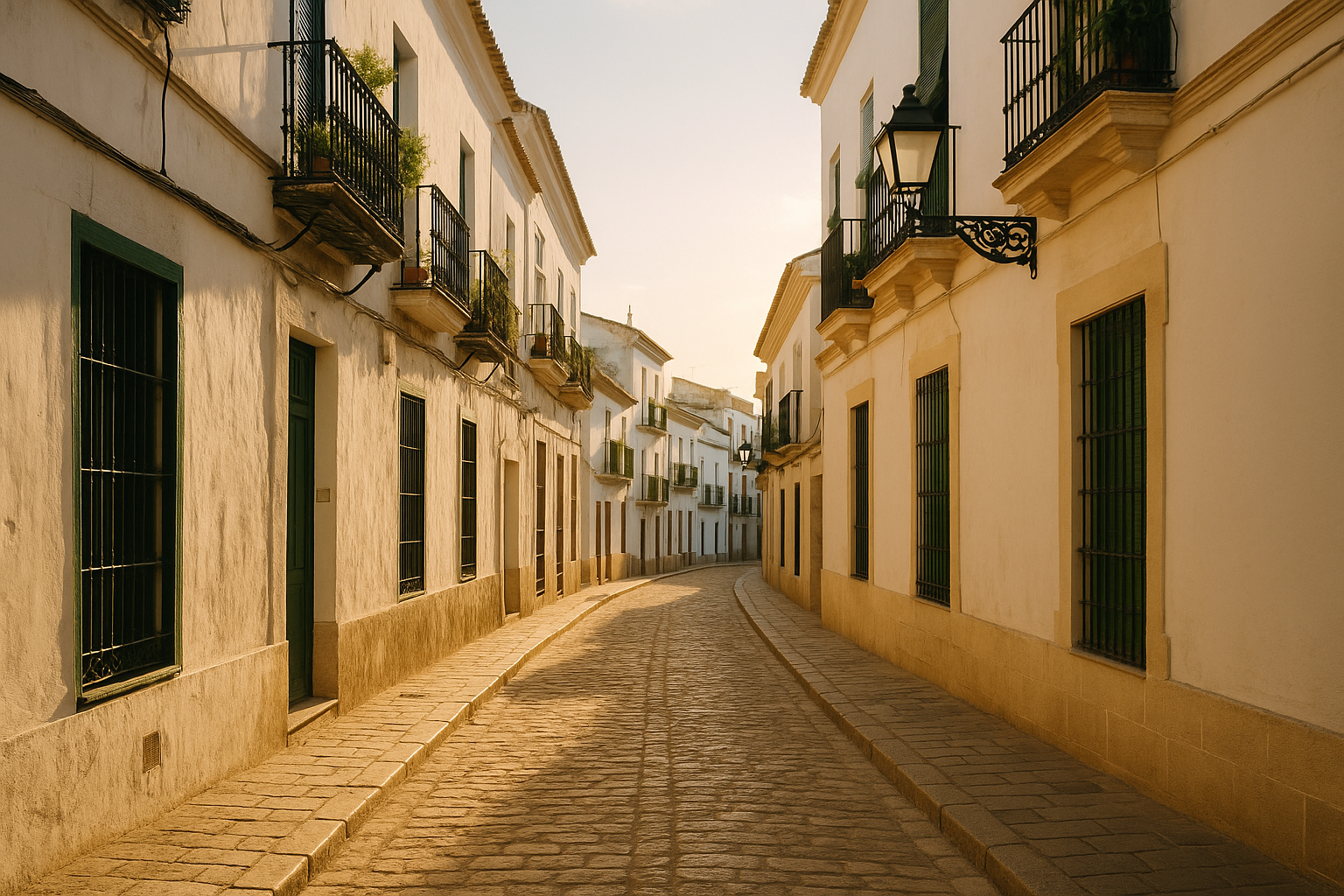
Jerez makes more sense once you stop trying to consume it like a highlights reel.
This is a city of wine, horses, flamenco, food, habit, and civic memory. Not everything is glossy. Not everything is arranged for outsiders. That is not a bug in the experience. It is part of the reason the city still feels like itself.
A lot of first visits go wrong for a simple reason: people arrive with the wrong mental model.
They expect one of three things:
- a polished museum city with obvious monuments and tidy routes
- a beach-adjacent Andalusian weekend add-on
- a wine-tourism stage set where the point is to collect bodegas and move on
Jerez is better than all of those versions, but only if you approach it properly.
The right expectation
Jerez is strongest when you treat it as a living city with a deep cultural grammar, not as a sightseeing machine.
That means a first trip should not be built around doing the maximum number of things possible. It should be built around understanding how the city actually hangs together.
What makes Jerez interesting is not just that it has sherry, flamenco, and famous festivals. It is that these things are woven into everyday identity rather than hanging there as disconnected attractions.
So the first rule is simple:
come to read the city, not merely to consume it.
What deserves priority on a first trip
1. Learn just enough about sherry to stop drinking blindly
You do not need a masterclass on day one, but you do need enough context to understand that sherry is not one flavour and not one mood.
A visitor who gets a little orientation first will enjoy the rest of the city more, because wine culture here is not decorative. It changes how bars work, how food works, and how social life is paced.
2. Spend real time walking the centre
Jerez is a city you read by walking.
The historic core, its churches, plazas, worn corners, better streets, and rougher edges tell you more than a fast circuit of “the main things to see.” You start to understand the mood of the place by noticing contrasts:
- noble and scruffier streets side by side
- formal architecture near everyday bar life
- silence in one block and social noise in the next
3. Leave space for flamenco with context
Do not reduce flamenco to a random night activity you book after too much wine. If it matters to you, treat it like culture, not a decorative add-on.
That does not mean becoming solemn. It means choosing one good encounter instead of one generic spectacle.
4. Eat in places that still feel like Jerez
The city rewards appetite, but also judgement. Some places are alive. Some are merely convenient. Some are designed for people who will never come back. On a first visit, the goal is not to conquer a list. The goal is to eat in ways that help you understand local rhythm.
5. Check the calendar before you build the trip
Jerez changes dramatically with season.
A normal weekday in one month and a city in Feria, Semana Santa, MotoGP week, or festive winter mode are not the same place. Timing is not an afterthought here. Timing is part of the subject.
How long to stay
If you only give Jerez a few rushed hours, the city can feel harder to read than it really is.
A better first stay is:
- one full day minimum if you are forced to be efficient
- two nights if you want room to breathe
- longer if food, wine, culture, or local atmosphere matter to you more than speed
The city improves when you allow it to unfold over several moments instead of one hard push.
A sensible first 48 hours
First morning
Keep the first morning light and observational.
- get coffee and breakfast in the centre
- walk without turning every ten minutes into a task
- let the city set your tempo before you start trying to optimise it
This is the wrong time to overbook. The city will tell you more if you let it.
First afternoon
This is a good moment for one structured anchor:
- one bodega visit
- or one focused cultural visit
- or one slow tabanco route with intention
Not all three. Choose one and do it properly.
First evening
Use the evening to eat without panic and to notice where the city becomes socially legible.
You do not need ten tapas stops and two bars and a final “hidden gem.” One good dinner rhythm and one good extra stop is enough.
Second day
Use the second day for whatever the first day made you curious about:
- more wine context
- more food
- flamenco
- a better understanding of where people actually spend time
- another walk through a different stretch of the city
That is a much better approach than arriving with a rigid list made elsewhere.
Mistakes first-timers make
Treating Jerez as a quick add-on to somewhere else
This usually produces the weakest version of the city. Jerez rewards attention more than speed.
Thinking all bodegas are interchangeable
They are not. Some are educational. Some are polished. Some feel more alive. Some are basically theatre with barrels.
Confusing atmosphere with quality
A place can look traditional and still not be the best use of your time. Conversely, a place does not need to be aggressively rustic to be good.
Planning every hour too tightly
This is one of the surest ways to miss the city’s texture. Jerez wants a little slack in the day.
Ignoring local timing
If you keep imposing your own tempo on everything, the city can feel inconvenient. Once you begin asking what the right time for something is here, everything gets easier.
What not to prioritise too early
On a first trip, I would not over-prioritise:
- endless monument collecting
- trying every “famous” bar in one go
- over-designed itineraries that leave no room for instinct
- fake authenticity hunting
- inflated day-trip plans before you have even understood Jerez itself
The first task is not to complete the city. The first task is to begin understanding it.
The right mindset
Curiosity beats conquest.
That is really the whole thing.
Jerez is not a city that needs you to admire it from a distance. It needs you to pay attention. It helps if you can tolerate some rough edges, some unevenness, and some ambiguity. In return, the city gives you something better than smoothness: character, continuity, and a sense that local life did not vanish the moment tourism arrived.
So if this is your first time, do less, notice more, and let the city explain itself in the order it prefers.
That is where the good trip begins.